Alienware 16 Area 51 Gaming Laptop Review: Real User Experience After 3 Months
Introduction — Why I Bought the Alienware 16 Area 51
I've been using the Alienware 16 Area 51 for about three months now as my primary gaming and content-creation machine. I wanted a desktop-replacement laptop that could reliably handle high-refresh-rate gaming, video editing, and live streaming without forcing me to sit next to a tower. After reading specs and watching benchmarks, I pulled the trigger on a configuration that prioritized GPU performance and a high-refresh 16-inch display. This review is what I learned in everyday use — the things I loved, the annoyances that crept up, and what I think you should consider before buying one.
My Configuration and Usage Pattern
For context, the unit I purchased was configured with a high-end mobile CPU (a multi-core HX-series chip), a flagship laptop GPU, 32GB of DDR5 RAM, a 1TB NVMe SSD, and a 16-inch high-refresh OLED display. I use the laptop for 4–6 hours of gaming several days a week (titles that include fast-paced shooters and open-world RPGs), and for casual video editing and streaming sessions on the weekends. I also travel with it occasionally, so portability and battery life were factors I evaluated in real-world conditions.
Design and Build Quality
Out of the box, the Area 51 feels like a premium, purpose-built gaming machine. The chassis is sturdy and heavier than ultrabooks — you can feel the engineering trade-offs for cooling and performance. I appreciated the metal accents and the signature Alienware aesthetic; it looks like a gaming machine, not something trying to be inconspicuous. The hinge is solid, and the lid doesn’t flex when I pick the laptop up by the edges.
That said, the weight is noticeable: it's not comfortable for all-day lap use. If you expect to carry this daily on public transit, be ready for a shoulder workout or a serious backpack. I routinely carry it for short trips and felt the weight after a couple of hours walking.
Display — Bright, Smooth, and Colorful with a Caveat
The 16-inch display is one of the reasons I chose this model. The high refresh rate (mine is configured at 240Hz) makes competitive shooters feel butter-smooth, and the OLED panel delivers deep blacks and vivid colors that pop in single-player games and content-creation work. Brightness is generally good for indoor use, and the color accuracy out of the box was surprisingly decent for a gaming laptop.
One thing I noticed: the glossy OLED surface can reflect bright indoor lighting and sunlight, so if you work in a brightly lit room you might fight glare. Also, while OLED contrast is excellent, peak brightness in HDR scenes occasionally felt a step behind the brightest LCD alternatives. For color-critical photo or video work, I still recommend running a quick calibration, but for most gamers and creators the display is excellent.
Performance — Desktop-Level Power, Mostly
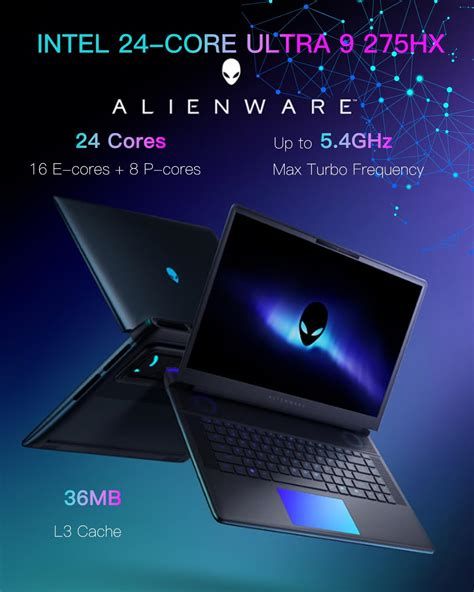
In my experience, the Area 51 delivers stellar gaming and multi-threaded performance. Games hit high frame rates at native resolution with ultra settings, and switching to DLSS or equivalent upscalers pushed frame rates even higher without obvious visual compromise. Video exports in my editing workflow were noticeably faster than my previous laptop, and streaming while gaming was possible without massive frame drops.
That said, the laptop is not a thermally infinite device. In extended, sustained workloads (two-plus hour rendering sessions or marathon gaming sessions), the cooling system begins to work very hard: fans ramp up to loud levels and I do see some thermal throttling on the CPU in extreme scenarios. For the majority of gaming sessions I had no issues, but if you demand sustained peak CPU performance for hours, a desktop or an external cooling solution will still edge it out.
Thermals and Noise
Thermals are the necessary trade-off for the power you get. The chassis handles heat well compared to thinner gaming laptops, and the temperatures generally stay within safe ranges. However, those fans are audible when the laptop loads up. I noticed the fan curve is conservative at first, then aggressive under sustained load — which is fine, but the noise level can be distracting if you stream with a condenser mic in the same room. I solved this by tweaking fan curves and using a boom mic with cardioid rejection.
If you’re sensitive to noise, consider using headphones or configuring custom thermal profiles. Alienware’s Command Center allows you to switch between performance and quiet profiles, and you can fine-tune things to find a happy medium.
Keyboard, Trackpad, and Input Experience
The keyboard is comfortable for long gaming sessions and surprisingly solid for typing. The key travel is satisfying, and the per-key RGB lighting via AlienFX is a fun, customizable touch. I liked setting different profiles for games and desktop work — it’s a small but meaningful convenience.
Find top-rated Laptops & Computers products at great prices.
View Offers →The trackpad is precise and responsive, though I rarely use it for gaming. It’s fine for browsing and light productivity work, but if you rely on a laptop trackpad for heavy creative work you’ll probably prefer an external mouse for ergonomics and precision in longer sessions.
Speakers and Webcam
The built-in speakers are better than average for a laptop: they get loud and provide decent mids and highs, but they lack deep bass. Movies and game soundtracks sound immersive, but for music production or bass-heavy tracks I paired the laptop with studio monitors or a good headset.
The webcam is serviceable for video calls and streaming overlays but not exceptional in low light. I ended up using an external webcam for anything that needed sharp detail or color fidelity in dim environments.
Battery Life — Expect Compromises
Battery life is the traditional weak point of high-performance gaming laptops, and the Area 51 is no exception. In my mixed-use testing (browsing, streaming video, light productivity with display at 60Hz), I averaged around 3–4 hours. Under gaming load, the battery drains much faster — closer to 1–1.5 hours depending on settings and whether the GPU is under sustained load.
I noticed the system performs differently on battery vs. plugged in; to get the full performance you have to keep it connected to the power brick. If you need l…
Ports, Connectivity, and Expandability
One area where the Area 51 scored highly for me was ports and expandability. There are multiple USB-A and USB-C ports, a full-size HDMI, an Ethernet jack, and at least one high-speed Thunderbolt-capable USB-C on my configuration. That made it straightforward to connect a stream deck, external monitors, and my studio interface simultaneously.
Internally, I appreciated the relative ease of upgrading RAM and storage compared to many ultra-slim gaming laptops. I added a second SSD after a few weeks without much trouble. If you like to tinker or want to extend the machine’s life by upgrading storage or RAM, this model is friendlier than many competitors.
Software and Bloat — Alienware Command Center
Alienware’s Command Center is powerful: it consolidates thermal profiles, AlienFX lighting, performance modes, and fan controls. In my experience, it’s useful and frequently updated. However, the software can be a bit heavy and, at times, intrusive when it prompts for updates. Once I tuned it to my preferences and disabled a few notifications, it behaved well.
One annoyance I had early on was preinstalled applications and utilities that I didn’t need. I removed or disabled several of them to reduce background processes and streamline startup time.
Durability and Long-Term Impressions
After three months, I’ve had no hardware failures and the build has held up well to daily use and travel. The finish shows minor fingerprints but no visible scratches or scuffs from my typical handling. I do recommend a padded sleeve or a dedicated laptop compartment — the laptop’s angular design can catch on fabric or small items inside a bag.
Discover deals on Laptops & Computers — updated daily.
See Deals →Pros & Cons
- Pros: Desktop-level gaming performance in a portable chassis; excellent high-refresh OLED display; robust port selection and expandability; comfortable keyboard and solid build quality; AlienFX customization and Command Center control.
- Cons: Heavy and not ideal for daily commuting; loud fans under sustained load; battery life is short under heavy use; glossy display can glare in bright rooms; software includes some unnecessary preinstalled utilities.
Comparison Table — How It Stacks Up
| Model | Typical Use Case | Performance | Portability | Battery (real-world) |
|---|---|---|---|---|
| Alienware 16 Area 51 (this review) | Desktop replacement: high-end gaming + streaming | Top-tier mobile GPU + strong multi-core CPU; excellent for high-refresh gaming | Heavy; suitable for short trips, not daily ultra-portable carry | Mixed use: ~3–4 hrs; gaming: ~1–1.5 hrs |
| Razer Blade 16 | Portable high-performance gaming | Very strong; slightly less thermal headroom due to thin chassis | More portable than Area 51 | Mixed use: slightly better than Area 51 |
| MSI Titan | Performance-first with desktop-like cooling | Comparable or better in sustained loads (larger chassis) | Very heavy | Similar short battery life under load |
| ASUS ROG Zephyrus | Balanced gaming and portability | Great for gaming, sometimes trades peak performance for thinness | Very portable | Usually better battery life in mixed usage |
Buying Guide — What to Consider Before You Buy
1. Decide your primary use
In my experience, the Alienware 16 Area 51 is best if you need high GPU performance and a premium gaming display. If you mainly travel for work and need long battery life, a gaming ultraportable or an ultrapowerful ultrabook might suit you better.
2. Choose the right display option
If competitive gaming is your priority, go with a high-refresh-rate panel. If color accuracy for content creation matters more, opt for a model with a higher color gamut or consider calibrating the panel after purchase.
3. Prioritize cooling if you run sustained loads
If you render video or stream at high bitrates for extended periods, consider configurations with better thermal headroom and invest in fine-tuning the Command Center profiles. An external cooling pad helped me keep thermal spikes in check during long sessions.
4. Don’t skimp on RAM and storage
32GB of RAM felt like the sweet spot for me — enough for gaming, streaming, and light editing without swapping. If you do heavy multi-track editing or large-scale rendering, consider 64GB. Add a second NVMe drive if you plan to store large game libraries locally.
5. Check warranty and support options
High-end laptops can produce occasional quirks; I recommend checking the warranty length and what it covers. Extended or onsite support options can be worth the premium if you rely on the machine for work.
6. Plan for portability needs
Think about how often you’ll carry the laptop. If it’s daily, look at weight and case options. I found a well-padded backpack and a lightweight sleeve minimized the discomfort, but the device still felt hefty over long commutes.
7. Accessories to consider
- A quality gaming headset or external speakers for fuller audio
- An external webcam for better low-light video calls
- An external NVMe enclosure if you want fast external storage portability
- A cooling pad if you routinely push sustained CPU/GPU loads
Final Thoughts and Conclusion
After three months with the Alienware 16 Area 51, what I found was a powerful, well-built desktop replacement that nails the gaming experience and handles content creation very well. I was impressed by the display, the raw gaming performance, and the system’s expandability. At the same time, I noticed that the machine demands compromises: weight, fan noise, and short battery life under load. If you want a machine to replace a desktop and value peak mobile GPU performance above portability, the Area 51 is a compelling option. If you routinely need quiet, long battery life, or the lightest carry, you may want to look elsewhere.
In my experience, the Area 51 is a machine you buy because you want power and don’t mind the trade-offs that come with it. After three months it’s become my go-to machine for gaming sessions and creative work at home and on short trips — but it’s not the kind of laptop I’d grab for a full day of meetings or for travel-heavy weeks. The balance it strikes between raw power and usability worked well for what I needed, and with some software tuning and a couple of small accessories, it fit comfortably into my workflow.